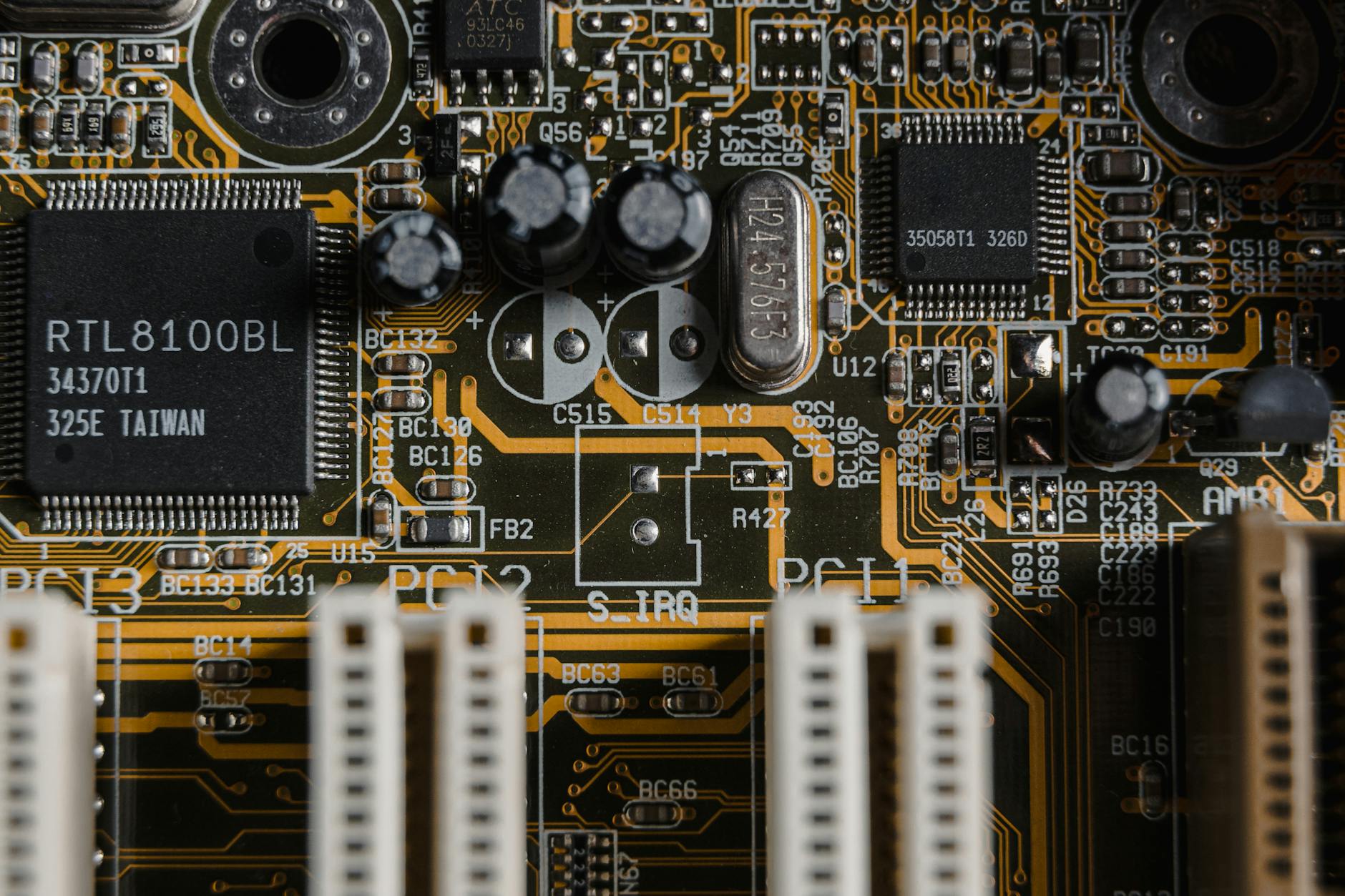
Shares of major chipmakers and hardware suppliers slid sharply in a global rout that spread from Asian markets into U.S. trading, as investors grew increasingly nervous about the mountain of debt backing the artificial intelligence buildout. The selling intensified alongside reports that credit default swaps tied to CoreWeave, a cloud-computing firm central to the AI infrastructure boom, moved into distressed territory — a signal that bond markets are pricing in meaningfully higher risk of default. Together, the moves point to mounting skepticism about whether the borrowing fueling AI data-center expansion is sustainable.
The tech-heavy pressure showed up most clearly in the Nasdaq Composite, which eked out only a 0.08% gain to 26,713.03, a far more muted advance than the other major indexes posted. That weakness in chip and hardware names was offset elsewhere in the market: the Dow Jones Industrial Average jumped 1.08% to close at 52,177.69, while the S&P 500 added 0.33% to finish at 7,744.06, just shy of its 52-week high of 7,844.52.
The divergence underscores a split market personality right now. Money appears to be rotating out of the most AI-exposed hardware names and into other corners of the market, even as major benchmarks overall stay near record territory. The Dow sits well above its 52-week low of 45,057.28, and the S&P 500 remains within striking distance of its own all-time high, suggesting broad investor confidence hasn't cracked — but the cracks in AI-related credit and chip stocks are worth watching closely.
CoreWeave has become one of the most closely watched proxies for the health of AI financing because it relies heavily on debt to fund the massive data-center buildouts that power generative AI workloads for clients. When credit default swaps — essentially insurance contracts against a company defaulting — jump to distressed levels, it means bond investors are demanding steep premiums to hold that risk, a red flag that can ripple into equity markets if lenders start pulling back.
What happens next will hinge on whether this is an isolated credit concern specific to a handful of heavily leveraged AI infrastructure players or a broader repricing of risk across the sector. Nvidia, AMD and Dell's swoon suggests investors are at least temporarily treating AI capital spending as a liability rather than a growth story. If financing costs for data-center buildouts keep rising, that could slow the pace of AI infrastructure spending that has driven much of the market's gains over the past two years — a dynamic traders will be watching closely heading into next week.